
Cocos (Keeling) Islands: Australia's Secret Island Paradise
Cocos (Keeling) Islands Travel Guide: Australia’s Hidden Paradise
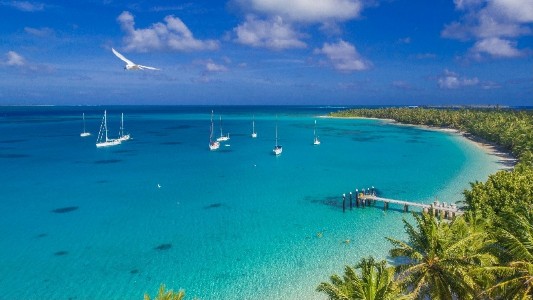
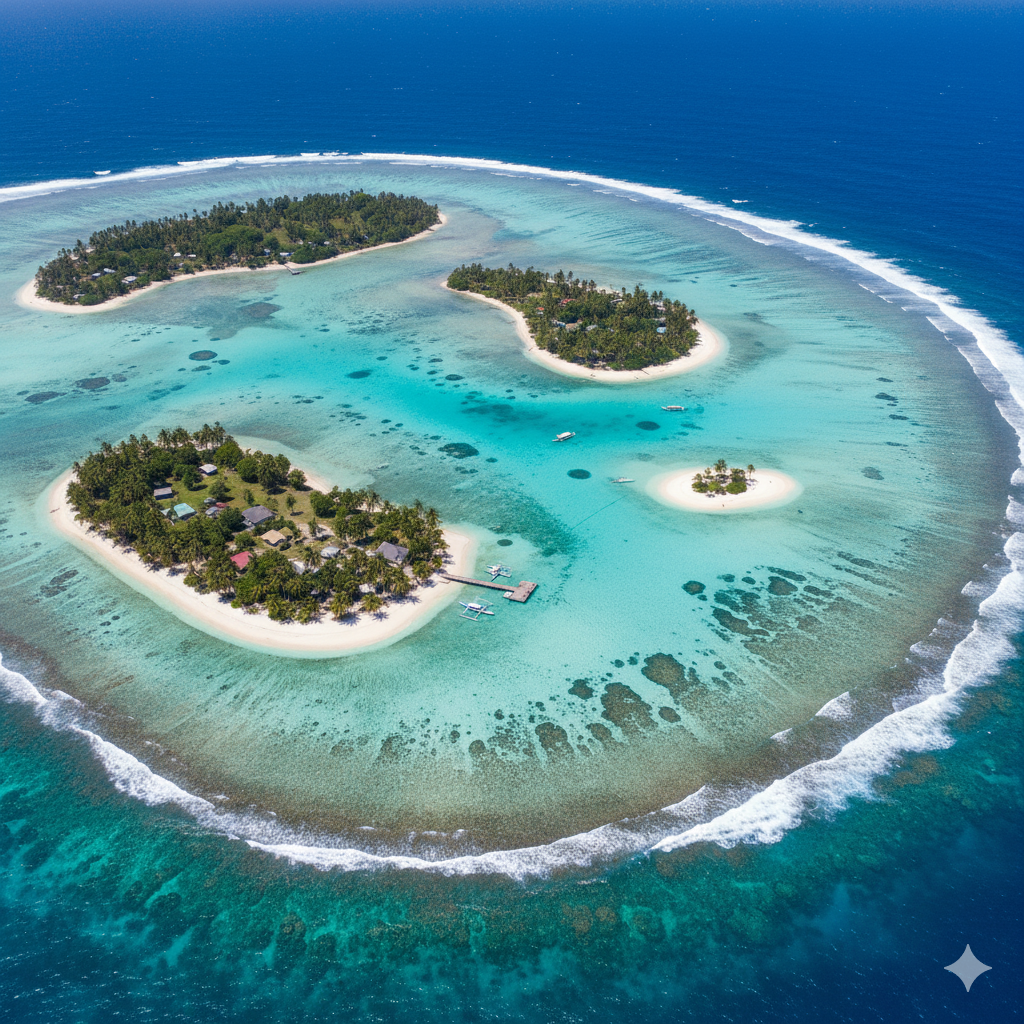
Tucked away in the vast expanse of the Indian Ocean, approximately halfway between Australia and Sri Lanka, lies a destination so pristine and remote it feels like a well-kept secret. The Cocos (Keeling) Islands, an Australian external territory, is an archipelago of 27 coral islands forming two stunning atolls. With a population of just under 600 people, it offers an escape to a world of turquoise lagoons, white-sand beaches, and a unique blend of cultures.
For the intrepid traveler seeking a getaway far from the crowds, Cocos is a dream destination. Here’s your essential guide to planning a trip to this hidden gem.
Reaching Cocos is part of its adventure charm. There are no direct international flights. Your journey will be via the Australian mainland.
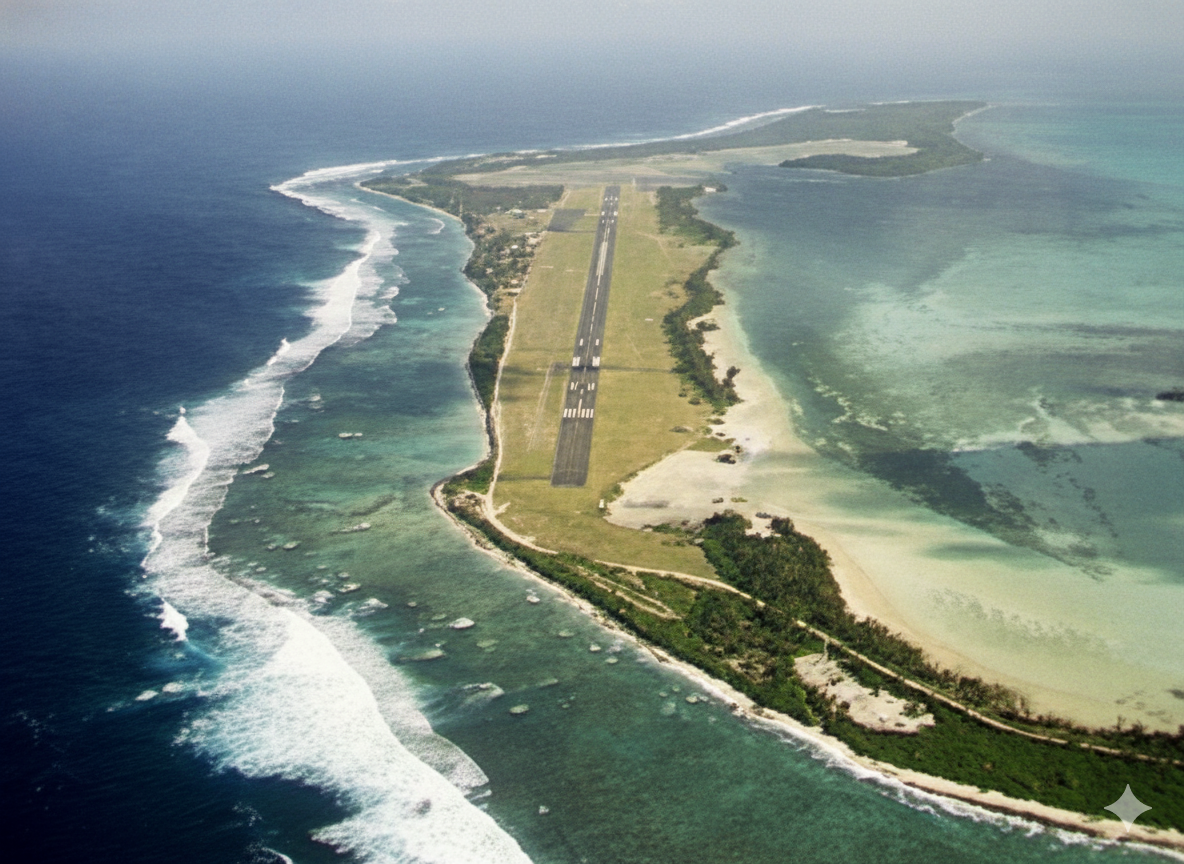
By Air: The only commercial flights are operated by Virgin Australia. They fly from Perth, Western Australia, to Cocos (Keeling) Islands Airport (CCK) on West Island twice a week. The flight takes approximately 4.5 hours.
The Journey: Some flights make a brief stop at Christmas Island, another Australian territory, making it possible to visit both in one trip.
Example: "Booking your flight well in advance is crucial. A traveler from Sydney would first need to fly to Perth (a 4-5 hour flight) before connecting to the weekly Cocos service."
Don't expect large international resort chains. Accommodation on Cocos is intimate, family-run, and perfectly suited to the island's low-key vibe.
The Cocos Islands Lodge (West Island): This is a popular choice, offering self-contained apartments just a short walk from the beach. It’s an excellent base for exploring the main island.
The Cocos Beach Motel (West Island): Another comfortable option on West Island with easy access to the airport and the local shop.
Homestays and Holiday Homes (Home Island): For a more immersive cultural experience, consider a homestay or renting a holiday home on Home Island. This allows you to live within the Cocos Malay community. Websites like Airbnb and local rental listings feature several properties.
Statistic: There are fewer than 10 formal accommodation providers across the islands, so securing your stay early is highly recommended, especially during peak season.
The food scene is a delightful reflection of the islands' heritage, blending Australian staples with vibrant Malay cuisine.
Local Cuisine: The heart of Cocos Malay food is on Home Island. You can find local eateries serving dishes like Mee Goreng (fried noodles), Nasi Lemak (coconut rice), and fresh seafood curries.
Dining Options: On West Island, the Cocos Club and a couple of small cafes offer meals. The Bunga Raya Restaurant on Home Island is a must-visit for an authentic taste of local flavors.
Self-Catering: Both West Island and Home Island have small grocery stores (the Cocos Islands Cooperative Society). However, as most goods are imported, prices can be high, and selection may be limited. Bringing some non-perishable snacks is a good idea.
Cocos enjoys a tropical climate year-round, moderated by southeast trade winds.
Dry Season (April to October): This is the most popular time to visit, with lower humidity, less rainfall, and pleasant temperatures averaging 24°C - 29°C (75°F - 84°F).
Wet Season (November to March): This period is hotter and more humid, with a higher chance of rain and thunderstorms. While there's still plenty of sunshine, it's also the season for tropical cyclones, though they are rare.
Quote from a local: "The weather dictates the pace of life here. One day the lagoon is a glassy calm, perfect for snorkeling; the next, the winds pick up, and it's ideal for kitesurfing. You learn to go with it."
Cocos is not a budget destination. Its remoteness makes everything more expensive.
Estimated Budget (for one week, per person):
Flights from Perth: AUD $1,200 - $1,800 (round trip)
Accommodation: AUD $150 - $250 per night
Food & Drink: AUD $80 - $150 per day (more if eating out frequently)
Tours & Activities: AUD $50 - $150 per activity (e.g., snorkeling tours, kayak hire)
Total Estimated Cost: A realistic budget for a one-week trip is between AUD $2,500 and $4,000+ per person, excluding international flights to Perth.
The Cocos (Keeling) Islands are a safe and peaceful territory.
Governance: As an Australian territory, Australian federal law applies. Western Australian state law also applies for most day-to-day matters.
Policing: The Australian Federal Police (AFP) has a small presence on the islands, typically one or two officers, supported by local special members. Crime rates are very low.
Respectful Conduct: Travelers are expected to respect local customs, especially on Home Island, where the population is predominantly Muslim. Dress modestly when away from the beach.
You will need transport, but the islands are small and easy to navigate.
On West Island: The most popular way to get around is by bicycle. Many accommodations offer them for free or for a small fee. You can also hire a car or golf buggy. The main road is about 10 km long.
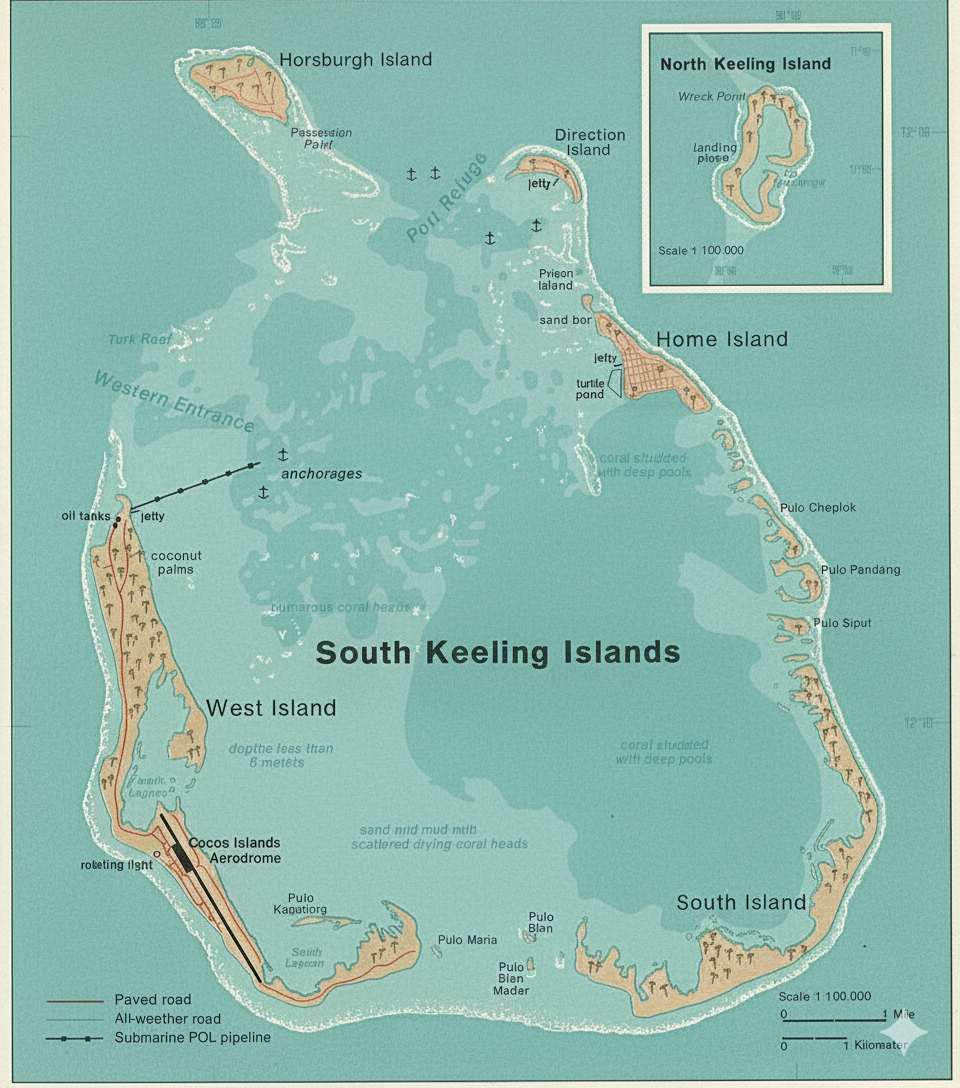
Between Islands: To get from West Island to Home Island or the uninhabited Direction Island, you use the ferry service, the Cahaya Baru. It runs several times a day.
On Home Island: Home Island is very small and easily explored on foot.
Example: "A typical day might involve a 10-minute bike ride to the ferry jetty on West Island, a 15-minute ferry to Direction Island to spend the day snorkeling 'The Rip,' and an evening stroll around the village on Home Island."
You'll have no trouble communicating.
Official Languages: There are none officially declared, but the spoken languages are English and Cocos Malay.
For Travelers: English is widely spoken, especially on West Island and in all tourist-facing businesses. On Home Island, you'll hear Cocos Malay spoken among locals, but everyone you interact with will speak English. Learning a few Malay greetings like "Selamat Pagi" (Good morning) will be warmly appreciated.
Documents: A valid passport is required. As it's Australian territory, Australian citizens can travel with other photo ID, but a passport is recommended. International visitors must have a valid Australian visa.
Health: There is no travel insurance available on the islands. Comprehensive travel insurance that includes medical evacuation is absolutely essential. The local medical clinic can handle basics, but serious conditions require evacuation to Perth.
What to Pack:
Reef-safe sunscreen and strong insect repellent.
Your own snorkel gear (though it can be hired).
Cash (AUD), as credit card facilities can sometimes be limited.
Any specific medications or personal items, as shopping options are minimal.
The main attraction is the breathtaking natural environment.
Direction Island & 'The Rip': Take the ferry to this uninhabited island for what is often called "Australia's best beach." The snorkeling spot known as "The Rip" is a channel where you can drift-snorkel alongside an incredible diversity of marine life, including reef sharks, turtles, and tropical fish.
Pulu Keeling National Park (North Keeling Island): A remote, uninhabited atoll and a sanctuary for seabirds, including the endemic Cocos Buff-banded Rail. Access is restricted and requires a special permit, usually for research purposes.
Home Island Cultural Tour: Immerse yourself in the unique Cocos Malay culture. Take a guided tour of the village, visit the Pulu Cocos Museum, and see the historic Oceania House.
Water Sports: The lagoon is a playground for kitesurfing, stand-up paddleboarding, kayaking, and fishing. Equipment hire is available on West Island.
Cossies Beach (Direction Island): Named after a former Australian Governor-General, this beach is a picture-perfect strip of sand and a prime spot for swimming and relaxation.
In conclusion, the Cocos (Keeling) Islands offer a rare blend of untouched natural beauty and rich cultural heritage. It’s a destination for those who find luxury in solitude, adventure in the sea, and joy in genuine connections. While it requires planning and a generous budget, the reward is an unforgettable experience in one of the world's last true island paradises.

share your opinion...